
A Creative Director Designs Their Studio
The three creative director habits that let Jony Ive protect his vision while building something new

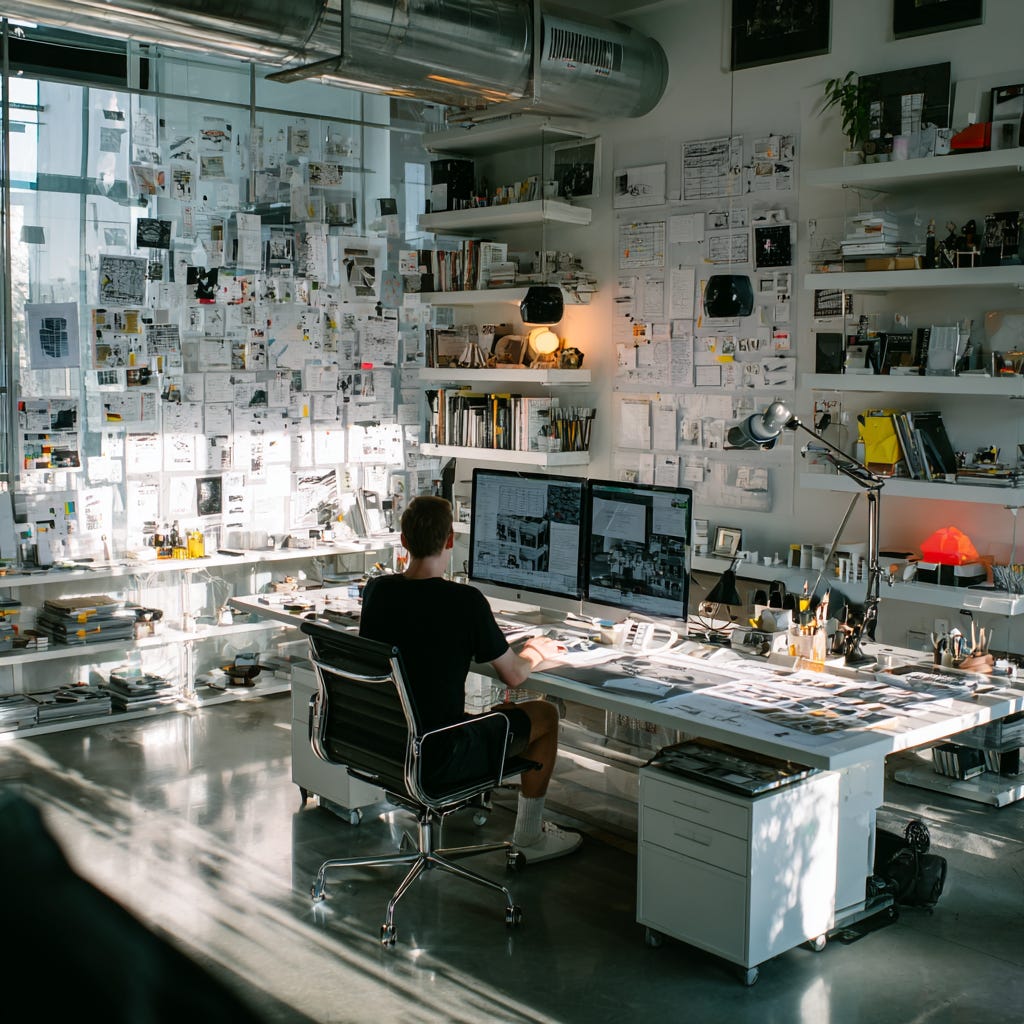
You don’t build a great studio by copying better studios.
Jony Ive left Apple after 27 years to build LoveFrom. Everyone read it as a career move—the inevitable next act for someone at the top of the industry. The story the business world told was: “Design icon breaks free, starts own firm, takes new projects.”
That’s not what actually happened.
What actually happened is that Ive looked at Apple in 2019 and realized something fundamental: the organization was no longer a reflection of his principles. So he did what any good creative director does when something doesn’t work anymore—he redesigned it.
Not from the outside. From the inside of a new one.
The studio he built is small, selective, and intellectually rigorous. He takes projects most people would reject as either too small or too risky (a healthcare initiative, a collaboration with Ferrari, advisory roles for brands redefining their entire category). He uses the best technology available (digital design tools, global collaboration systems, the ability to work across continents). But he’s not building a traditional design agency. He’s running his studio the way he’d run a brand—with absolute clarity about what it’s for.
Here’s the thing: Ive can serve as proof of a specific principle because he’s already been doing this thinking for 27 years inside Apple. The three habits that made him great as a creative director are the exact habits he’s now using to build the organization itself.

The Three Habits of Designing Your Studio
Most people who leave big organizations to build their own make the same mistake: they treat the business like a structure problem. Hire better people. Build better processes. Establish stronger culture. Get more clients.
This is the wrong brief.
The right brief is: How do I build an organization where the work I want to do is inevitable? Not achievable. Inevitable. Built into the system.
That’s what creative directors actually do. They read the brief like they wrote it. Develop a vocabulary for why things work. Hold three tensions at once.
Apply those habits to your studio, and everything changes.
Habit 1: Read the brief like you wrote it.
Most creatives who go solo treat the business brief as a given. The normal script: establish a service offering, hire team members with the right skills, take clients, deliver work, grow the business.
Ive’s rewrite: What if the organization existed to preserve creative autonomy while amplifying reach?
That’s a different brief entirely. It doesn’t ask “what should our service offering be?” It asks “what should protect our point of view?”
When you read the brief you write, you start asking better questions. Why hire a business manager when you can use strategic partners? Why build an internal production team when you can curate relationships with specialists you trust? Why scale to 50 people when you can stay at 10 and be infinitely more selective about what gets made?
Ive didn’t copy the playbook of other great creative leaders. He questioned what the org chart was supposed to accomplish, then built one that answers his version of the brief.
Habit 2: Develop a vocabulary for why things work.
Most creatives can tell you they like something or it “feels right.” A creative director can tell you why. They articulate the principle.
This is the difference between imitation and understanding.
Ive spent 27 years developing a vocabulary for why simple, invisible design works. Why integration matters. Why the relationship between form and function shouldn’t be a compromise. He didn’t just accumulate these as tastes—he built them into a frame.
When building your studio, the same thinking applies. What is actually working in your client relationships? What made that project legendary? What let you do your best work? Don’t just describe it as “good energy” or “smart clients.” Name the principle.
“I work best when the client trusts my expertise enough to question every assumption I make.”
“I produce better work for founders with a conviction about what they’re building, not just a business model.”
“I’m most energized by projects where the timeline forces a choice between volume and depth—and we always choose depth.”
When you can articulate the principle, you can build it into the system.
Habit 3: Hold the problem, the feeling, and the execution simultaneously.
A creative director holds three things at once. The problem the client is actually trying to solve. The feeling the work needs to create in a specific person. The execution that earns both.
Most people hold one at a time. That’s why most work succeeds at one thing and misses the other two.
When Ive designed the studio, he held:
The problem: How do you maintain creative vision as the organization scales?
The feeling: Autonomy. Craft-focused. Small-team dynamics. The sense that the work is the thing, not the company.
The execution: Strategic partnerships instead of hiring. Bring in collaborators for what you can’t do alone (engineering, fabrication, business operations), but keep creative direction singular.
It’s not a small studio. It’s an invisible studio that happens to be everywhere it needs to be.
The HMM Method — The Studio as a Product
There’s a framework I use called HMM. It applies to products, campaigns, and apparently, to studios too.
Human: What only the creator can bring. For Ive, this is creative direction. His taste. His POV on what design is supposed to do. Nobody else gets that vote. Everything about the studio is built to protect this.
Machine: What AI and systems and partners amplify. The design tools. The global collaboration infrastructure. The relationships with specialists who handle the execution once direction is set. The studio doesn’t get smaller. It gets smarter about leverage.
Mission: What serves something beyond the transaction. Every project at LoveFrom is chosen not just for the fee, but because it’s a chance to prove that design that’s good for humans is also good for business. The work is the statement.
Most creators don’t think about their studio through this lens. They think: people + process = output. Wrong. The best studios are designed like the best products: every component either brings something only a human can bring, gets amplified by tools and systems, or advances something beyond the transaction.
If it doesn’t clear at least one of those bars, you don’t need it.
What Happens When You Stop Hiring and Start Designing
Here’s what shifts when you think like a creative director about your own organization:
You stop asking “do I need this person?” and start asking “does this role serve my actual brief?”
You stop hiring for culture fit and start hiring for principle alignment. Do they understand what the studio is for?
You stop building a company and start building a system that makes the work inevitable.
You stop asking “how do I scale?” and start asking “what do I never want to compromise on, and how do I protect it?”
It’s not a smaller ambition. It’s a smarter one.
The Setup and the Stakes
Ive is proof that this works at the highest level. You can maintain absolute creative control, take on projects that matter, and have a studio that doesn’t require you to be in the office managing people instead of doing the work.
But this requires something most people never develop: a willingness to read your own brief like you wrote it. To articulate the principles that matter. To hold the three tensions without collapsing into one.
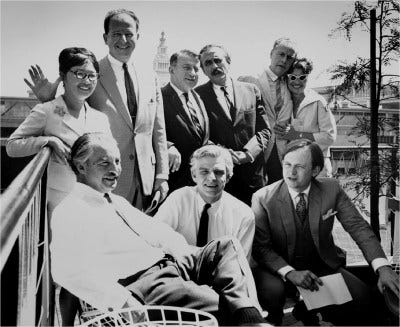
Howard Gossage did this in advertising. Built a firehouse instead of an agency. Filled it with people who cared about ideas, took only clients he believed in, and used his advertising budget to create culture. The firehouse became a philosophy. The work was inevitable.
Jony Ive is doing it right now.
The question isn’t whether you have the talent to build something great. The question is whether you have the discipline to design the organization that lets that talent do its best work.
One Thing You Can Try This Week
Before your next hire, before your next organizational decision, write down the brief—the one you would write if nobody else got a vote.
Not the industry brief. Not the competitive brief. Your brief.
What is this organization for? What principle does it protect? What do you never want to compromise on? What does the person who joins have to understand about that?
Then ask: Does our current structure serve this brief? If not, what’s one thing we could stop doing, or one partnership we could create, that moves us closer?
You’re not managing an organization. You’re designing one.
Forward this to someone who’s building something that matters and wrestling with how to keep it pure while it grows.